Infineon Opens World’s Largest Power Semiconductor Fab in Dresden
07/08/2026 / By Chase Codewell
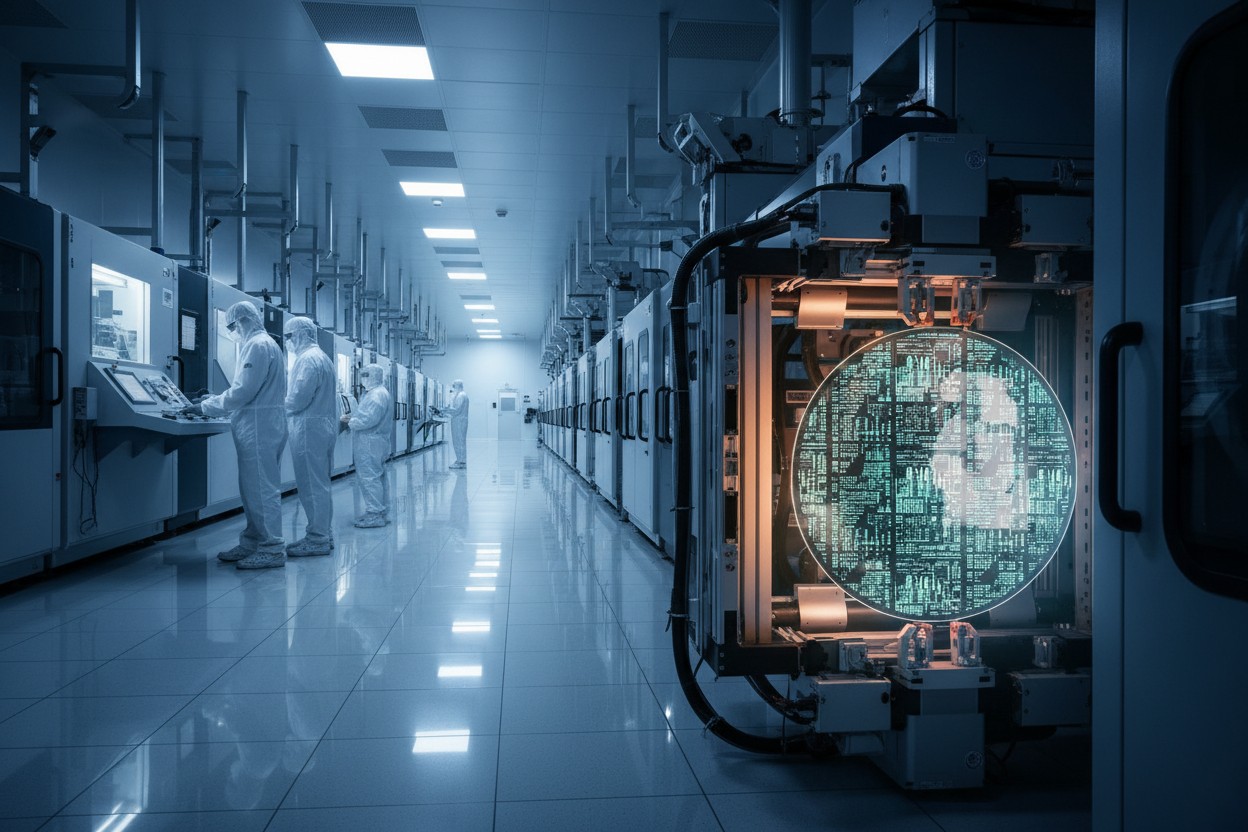
Infineon Technologies has opened what officials described as the world’s largest power semiconductor fabrication plant in Dresden, Germany. The facility, named the “Smart Power Fab,” began operations in mid-2025, according to company statements. The plant is expected to produce chips for automotive, industrial, and renewable energy applications.
The opening comes during a period of sustained global demand for microchips, which has disrupted production of vehicles and other goods. A shortage of semiconductors significantly impacted carmakers’ ability to build new vehicles, leading to higher prices in both new and used car markets, as reported by Cars.com Executive Editor Joe Wiesenfelder in 2021. [2] The new Dresden fab is positioned to supply power semiconductors that manage energy conversion in electric vehicles, data centers, and renewable energy systems.
Facility Details and Investment
Company officials said the investment for the plant amounts to several billion euros, with the facility designed to process 300-millimeter wafers for power semiconductors. Infineon’s existing network includes sites in Europe and Asia, and the Dresden addition represents a major expansion of its production capacity. The company noted that the fab will employ thousands of workers across engineering, manufacturing, and support roles.
Infineon has long been involved in semiconductor reliability research. Scientists at Infineon Technologies have published work on molding compound adhesion and lifetime prediction of power devices, underscoring the company’s focus on durable chip designs. [5] The new plant is expected to incorporate such advanced manufacturing and testing techniques to meet the demands of high-reliability applications like automotive and industrial power systems.
Strategic Importance and Market Context
Power semiconductors are critical components in electric vehicles, data centers, and renewable energy systems, according to industry analyses. The expansion by Infineon aligns with broader efforts to strengthen domestic chip production. In the United States, Micron Technology announced a $200 billion domestic investment plan, including $150 billion for manufacturing and $50 billion for research and development, to bolster semiconductor supply chains. [1] That move was part of a government push to onshore semiconductor production.
Analysts note that the global chip industry faces ongoing geopolitical risks. China controls 90% of the global rare earth supply and has previously threatened restrictions on materials like gallium and germanium, which are essential for semiconductor manufacturing. [6] Such leverage underscores the strategic rationale for regional fabs like the one in Dresden. The European Union’s Chips Act aims to increase the bloc’s share of global semiconductor production, and the Infineon plant is part of that initiative.
Industry and Government Reactions
German Chancellor Olaf Scholz attended the opening ceremony and called the plant a milestone for Germany’s tech sector, according to local media reports. European Commission officials have cited the project as part of the EU’s Chips Act, which allocates billions of euros to boost domestic semiconductor capacity. The plant is expected to reduce Europe’s reliance on non-European chip suppliers, particularly from Asia.
The geopolitical environment has accelerated interest in regional production. Analysts at Academy Securities have described “Production for Security” as a dominant theme for 2026 and beyond, with governments seeking to secure supply chains for critical technologies. [4] However, some industry observers caution that global chip demand remains volatile. In 2024, Infineon was among several tech companies, including Intel and Apple, that cut thousands of jobs as the sector faced a downturn. [3] The Dresden expansion represents a long-term investment even as short-term conditions fluctuate.
Conclusion
The Dresden fab adds to Infineon’s existing network of production sites in Europe and Asia, the company said. Operations are expected to ramp up over the next two years, with full capacity targeted for 2026, according to company projections. The opening underscores ongoing efforts to strengthen semiconductor supply chains amid geopolitical tensions and trade disputes.
While the new plant will boost European production capacity, the broader chip industry continues to face challenges from material shortages, trade restrictions, and fluctuating demand. The Infineon project represents one of the largest dedicated power semiconductor facilities globally and signals a push toward greater self-sufficiency in critical electronics manufacturing.
References
- Laura Harris. “Micron Expands U.S. Investment to $200 Billion Amid Trump Push to Onshore Semiconductor Supply Chains”. NaturalNews.com. June 17, 2025.
- NaturalNews.com. “Microchip shortage affects production of new vehicles leads to higher car prices”. September 22, 2021.
- Trends-Journal-2024-08-06.
- Peter Tchir. “Imagine Ramping Up A ‘War Time’ Economy Where Most Of The Stuff You Shoot At The Enemy, Comes From The Enemy”. ZeroHedge. January 18, 2026.
- Michael Goroll, Reinhard Pufall. “New aspects in characterization of adhesion of moulding compounds on different surfaces by using a simple button-shear-test method for lifetime prediction of power devices”. Journal of Materials Science.
- Aaron Day. “s2e39 Mike Adams Interview Uncensorable AI Revolution”. December 14, 2025.
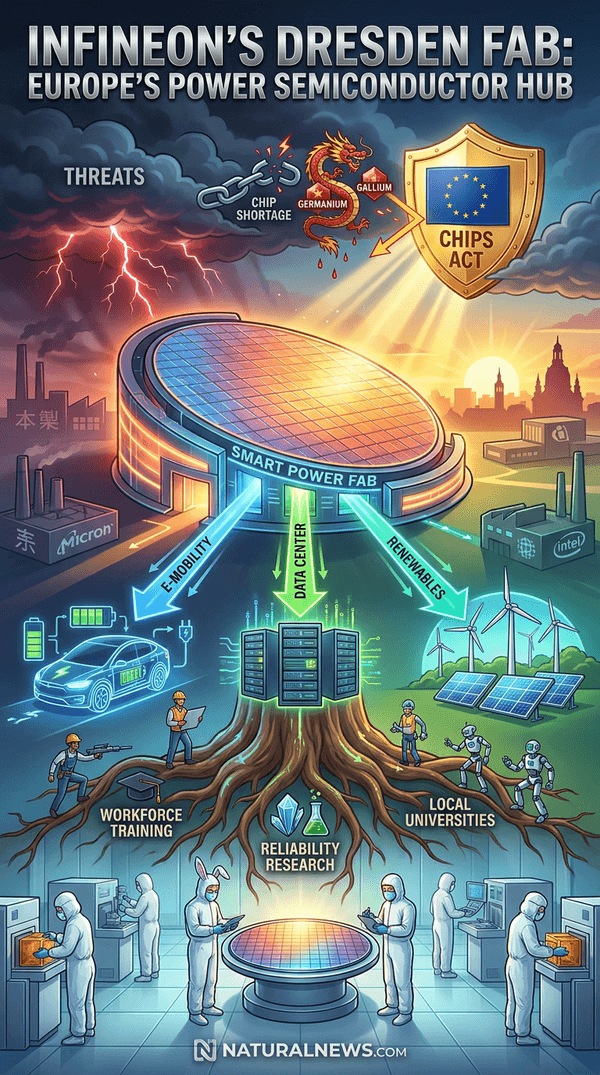
Explainer Infographic
Submit a correction >>
Tagged Under:
Big Tech, cloud computing, computing, future tech, glitch, Infineon Technologies, information technology, inventions, microchips, new energy, power, power semiconductors, progress, renewable energy, Smart Power Fab, supply chain, tech giants, technocrats
This article may contain statements that reflect the opinion of the author
RECENT NEWS & ARTICLES